Breeder reactor
A reactor that breeds more fuel than it burns.

Bkleinf2 · CC BY-SA 3.0
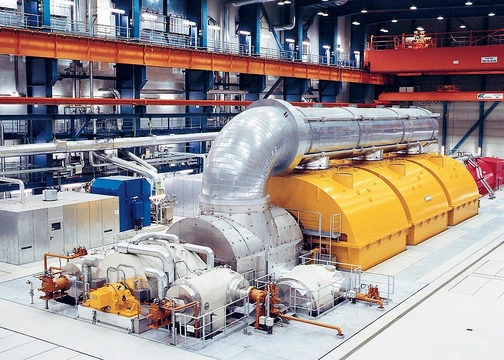
A breeder reactor is a nuclear reactor that generates more fissile material than it consumes. Breeder reactors achieve this through high neutron economy, allowing them to create more fissile fuel than they use, with extra neutrons absorbed by fertile material that transmutes into fissile material.
- type
- Nuclear reactor
- key_feature
- Generates more fissile material than it consumes
- first_developed
- Before 1960s
Lore & Background
Breeder reactors were initially attractive because they made more complete use of uranium fuel than light-water reactors, but interest declined after the 1960s as more uranium reserves were found and new enrichment methods reduced fuel costs.
Reader's Guide
The integral fast reactor (IFR) design specifically addresses waste disposal by using on-site pyroprocessing to recycle uranium and all transuranics, leaving only short-half-life fission products. Breeder reactors are central to several Generation IV reactor concepts, including gas-cooled, sodium-cooled, and lead-cooled fast reactors. Despite their potential, challenges remain in fuel cladding materials, coolant interactions, and economic viability, with current materials like austenitic stainless steel having known limits, while oxide dispersion-strengthened alloy steel is viewed as a long-term solution.
Did You Know?
- The integral fast reactor design includes an on-site electrowinning fuel-reprocessing unit that recycles uranium and all transuranics.
- Fast breeder reactors use unmoderated neutrons, while thermal breeder reactors use moderated neutrons.
The Thermal Advantage of Liquid Metal
The choice of liquid metal as a primary coolant is driven by a cluster of engineering advantages that water simply cannot match. Because metals conduct heat exceptionally well, a liquid metal loop can pull enormous thermal energy away from the core, enabling very high power density. That compactness is precisely what makes these designs appealing for naval vessels and submarines, where every kilogram and cubic centimeter counts. Water-based reactors, by contrast, must be cranked up to very high pressures just to keep the coolant from boiling, and that pressure introduces ongoing safety and maintenance headaches that a liquid metal system sidesteps entirely. The elevated operating temperatures of the metal also feed directly into the thermodynamic efficiency of the power-conversion cycle, improving both electrical output and fuel economy. On the mechanical side, the electrical conductivity of molten metal means the coolant can be circulated with electromagnetic pumps rather than conventional impeller machines. Finally, the very high boiling points of these metals keep vapor pressure low enough that the primary loop can run at or near ambient pressure, and some designs submerge the entire core and heat exchangers in a large pool of coolant, virtually eliminating the risk of losing inner-loop cooling.
A Century of Coolant Experiments
The search for the right liquid metal has been anything but straightforward. Mercury seemed like the obvious first pick because it is liquid at room temperature, and it powered Clementine, the very first liquid metal cooled nuclear reactor. Yet mercury's high toxicity, its relatively high vapor pressure even at room temperature, its low boiling point that produces noxious fumes when heated, its modest thermal conductivity, and a high neutron capture cross-section collectively pushed it out of favor. Lead offers excellent neutron reflection and gamma shielding, but its high melting point makes refueling and servicing difficult, and alloying it with bismuth to lower the freezing point introduces severe corrosion of structural metals.
The Breeder Connection and Fast-Neutron Physics
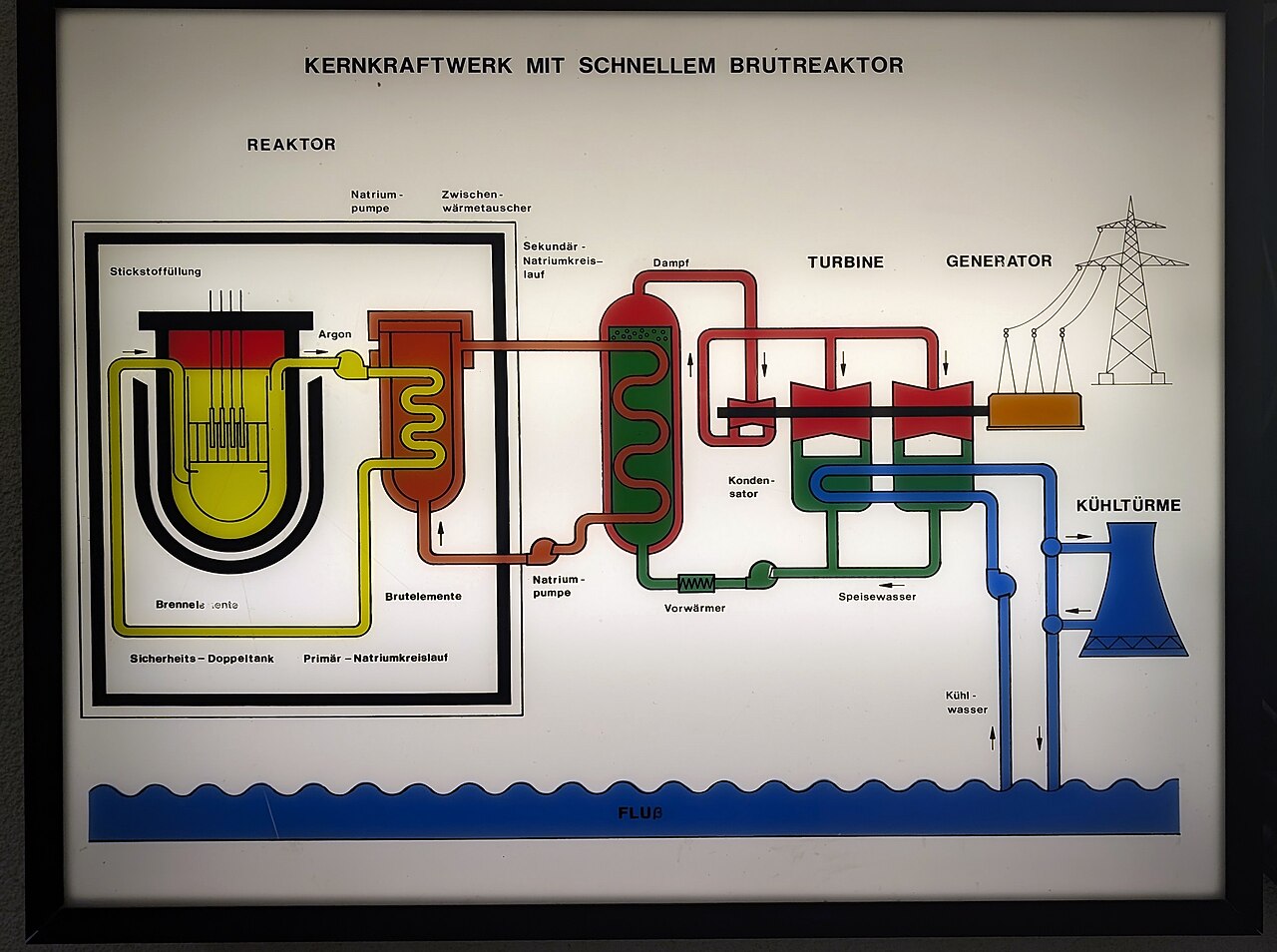
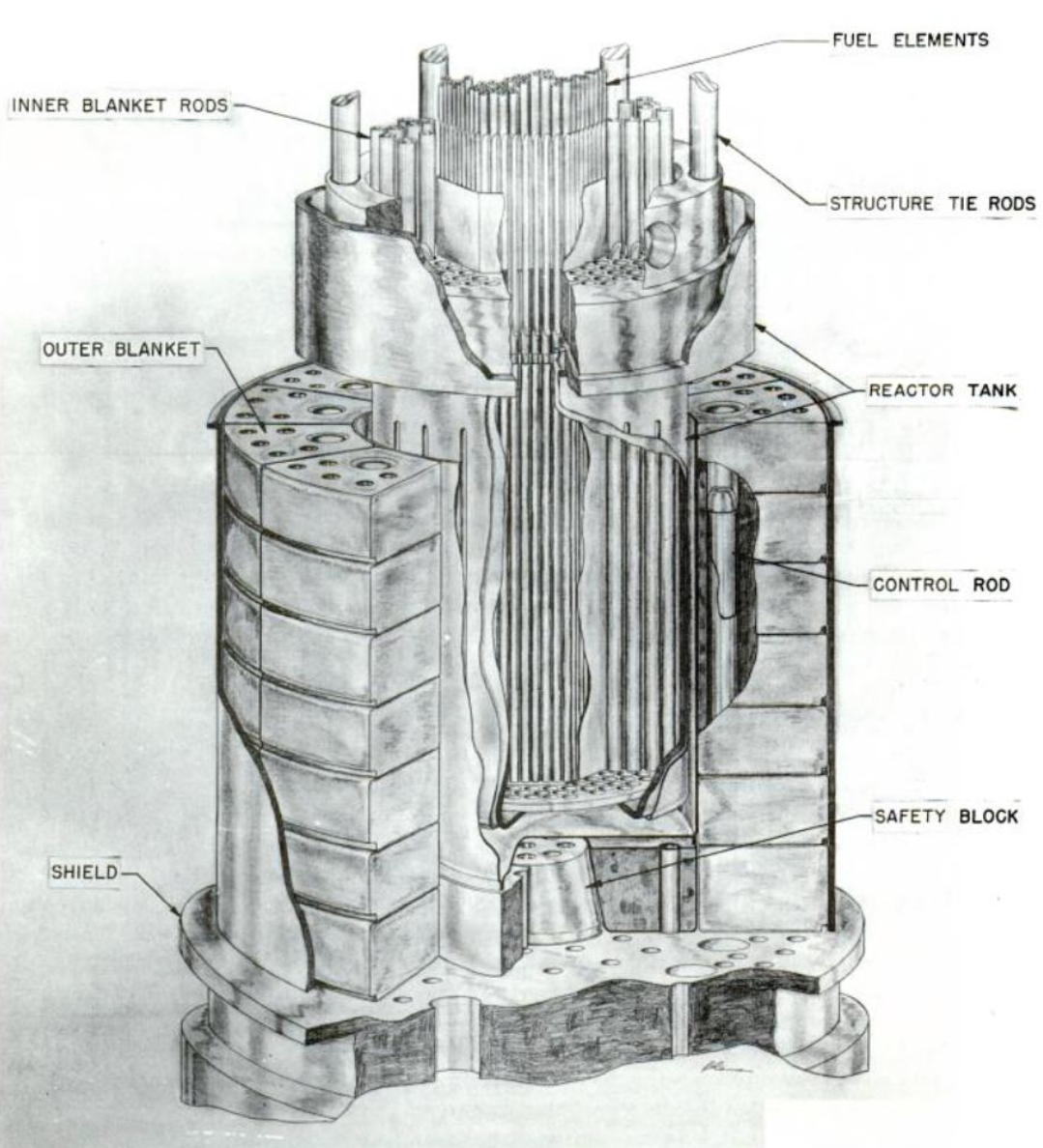
Liquid metal cooled reactors were the first reactor type adapted specifically for breeder power generation, and that connection remains their defining identity. Most fast-neutron reactors to date have been liquid metal cooled, earning the label liquid metal cooled fast reactors, or LMFRs. When such a reactor is surrounded by a breeding blanket that converts fertile material into additional fissile fuel, it becomes a liquid metal fast breeder reactor, or LMFBR. The physics behind this is elegant: sodium, for instance, is a poor neutron moderator, so it naturally lets the core operate with a fast neutron spectrum, which is exactly the spectrum a breeder needs. Liquid metal coolants have also been applied to thermal-neutron designs, such as the Sodium Graphite Reactor, where graphite serves as the moderator and allows the use of natural uranium instead of enriched fuel. Those SGRs enjoyed high-temperature operation and a strong prompt negative fuel temperature coefficient that made them comparatively easy to control, but they were experimented with in the 1950s beginning with the Sodium Reactor Experiment and soon lost ground to competing light-water designs and persistent sodium-handling problems.
Hazards, Demonstrations, and the Road Ahead
No coolant is without its perils, and liquid metals carry a distinctive set of risks. Inspecting or repairing a reactor buried in opaque molten metal is inherently difficult, and alkali-metal coolants like sodium present a genuine fire hazard. Neutron activation turns sodium into an intensely radioactive medium during operation, though the short half-life means the radioactivity does not create a long-term disposal burden. Today, the Russian BN series and the Chinese CFR series operate commercially, and two Generation IV sodium-cooled LMFR proposals, one oxide-fueled and one a metal-fueled integral fast reactor, point toward the next chapter. The Natrium system, built by TerraPower at Kemmerer, Wyoming, using a GE Vernova Hitachi PRISM reactor, represents the most visible near-term deployment.
Gallery
Frequently Asked Questions
What is a breeder reactor?
A breeder reactor is a nuclear reactor engineered to produce more fissile fuel than it actually burns during operation. Instead of simply depleting its initial fuel load, it converts surrounding fertile material into additional usable fuel through neutron absorption.
What is a breeder reactor's key ability?
Its defining trait is high neutron economy, which spares extra neutrons to transmute non-fissile isotopes into new fissile ones. This lets the reactor sustain itself far longer than conventional designs that rely solely on their starting fuel inventory.
More in Power Generation 1-20
Spotted an error? Know more?
This is a living reference — every entry is fact-audited, and reader corrections feed straight into our audit queue. Suggest an edit · See this site's audit record