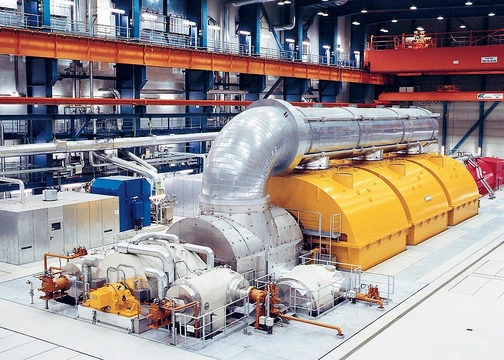
Fossil fuel power station
Thermal power stations burning fossil fuels to generate electricity.

A fossil fuel power station is a thermal power station that burns fossil fuels such as coal, oil, or natural gas to produce electricity. These stations convert the chemical energy stored in fossil fuels into thermal energy, then mechanical energy, and finally electrical energy, using prime movers like steam turbines, gas turbines, or reciprocating engines. They provide most of the electrical energy used in the world, operating as baseload or peaker plants, though since the 2010s many baseload plants have been used for dispatchable generation to balance variable renewable energy.
- field
- Electricity generation
- known_for
- Burning fossil fuels to produce the majority of the world's electrical energy
- primary_fuels
- Coal, oil, natural gas
- typical_efficiency
- 37% for coal and oil-fired plants; 56–60% for combined-cycle gas-fired plants
- major_emissions
- Carbon dioxide, nitrogen oxides, sulfur oxides, mercury, fly ash
- global_warming_impact
- Major emitters of CO2, a greenhouse gas contributing to global warming
Lore & Background
Fossil fuel power stations operate by burning fuel in a furnace to produce hot gases that convert water into steam in a boiler. The steam drives a turbine connected to a generator, with the spent steam condensed and recycled. In combined cycle plants, a gas turbine and heat recovery steam generator combine the Brayton and Rankine cycles for higher efficiency. Reciprocating engines, including diesel and spark-ignition types, are used in smaller or emergency applications, though steam turbines displaced them in central stations as loads grew. Coal is the most abundant fossil fuel and is relatively cheap, but it produces more greenhouse gas and pollution than petroleum or natural gas. Natural gas has largely replaced coal in some countries since the late 20th century, and oil-fired plants have been displaced by coal and gas after price increases in the 1970s. By-products such as flue gas containing carbon dioxide, water vapor, and pollutants like NOx and SOx, as well as solid ash from coal, must be managed. Fossil fuel power stations are major emitters of carbon dioxide, a greenhouse gas linked to global warming.
Reader's Guide
Fossil fuel power stations have been central to global electricity supply, providing the majority of electrical energy worldwide. Their design and operation are governed by thermodynamic limits, notably the Carnot efficiency, which restricts the conversion of heat into mechanical work and produces waste heat. This waste heat can sometimes be used in cogeneration for heating buildings or industrial processes. The choice of fuel—coal, oil, or natural gas—affects efficiency, emissions, and cost, with natural gas combined-cycle plants achieving higher efficiency (56–60%) than coal or oil plants (around 37%). Environmental concerns are significant: these stations emit carbon dioxide, a major greenhouse gas, along with pollutants like nitrogen and sulfur oxides, and for coal, mercury and fly ash. The article notes that brown coal emits nearly twice as much CO2 per unit of electric energy as natural gas, with black coal somewhat less. Despite these challenges, fossil fuel power stations remain a cornerstone of modern electricity infrastructure, with ongoing shifts toward dispatchable generation to complement variable renewable sources.
Did You Know?
- Typical thermal efficiency is around 37% for coal and oil-fired plants and 56–60% for combined-cycle gas-fired plants.
- Brown coal emits nearly twice as much CO2 per unit of electric energy as natural gas.
Frequently Asked Questions
What is a fossil fuel power station?
It is a thermal power plant that generates electricity by combusting carbon-based fuels such as coal, petroleum, or natural gas. Rather than relying on nuclear fission or renewable sources, it taps into the chemical energy locked within these fuels to ultimately produce usable electrical power.
How does a fossil fuel power station convert fuel into electricity?
The fuel is burned to create intense heat, which drives a prime mover—typically a steam turbine, gas turbine, or reciprocating engine—to spin an electrical generator. In essence, the station walks through a chain of energy conversions: chemical to thermal to mechanical to electrical.
What are the main fuels used in these plants?
The three primary fuels are coal, oil (petroleum), and natural gas. Which fuel a particular station burns largely determines its efficiency profile and the mix of pollutants it releases.
How efficient are fossil fuel power stations compared to other generation methods?
Coal- and oil-fired units typically achieve around 37% thermal-to-electrical efficiency, while modern combined-cycle gas plants can reach 56–60%. That means a significant share of the fuel's stored energy is lost as waste heat rather than captured as usable electricity.
Why do fossil fuel power stations face so much environmental criticism?
They release substantial quantities of carbon dioxide, nitrogen oxides, sulfur oxides, mercury, and fly ash into the atmosphere. Because CO₂ is a potent greenhouse gas, these plants remain among the largest single contributors to anthropogenic global warming.
More in Power Generation 1-20
Spotted an error? Know more?
This is a living reference — every entry is fact-audited, and reader corrections feed straight into our audit queue. Suggest an edit · See this site's audit record