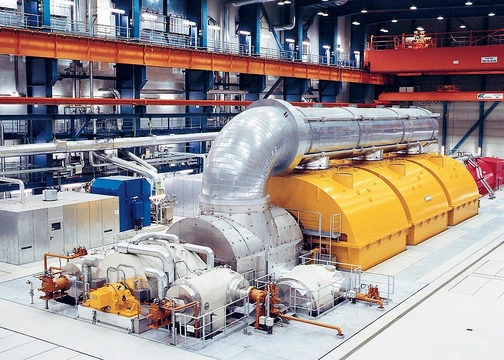
Gas-fired power plant
Burns natural gas to generate electricity; major emitter.

A gas-fired power plant, also known as a natural gas power plant or methane gas power plant, is a thermal power station that burns natural gas to generate electricity. These plants produce nearly a quarter of the world's electricity and are significant sources of greenhouse gas emissions. They convert chemical energy stored in natural gas (mainly methane) into thermal energy, then mechanical energy, and finally electrical energy, though they cannot exceed the Carnot cycle limit for heat-to-work conversion.
- type
- Fossil fuel power station
- fuel
- Natural gas (primarily methane)
- global electricity share
- Almost a quarter
- efficiency (combined cycle)
- Up to 64% (as of 2018)
- efficiency (simple cycle)
- 35–40%
Lore & Background
Gas-fired power plants are central to modern electricity grids, providing dispatchable generation to compensate for variable renewable energy deficits when hydropower or interconnectors are unavailable. In the early 2020s, batteries became competitive with gas peaker plants. Most analysts believe natural gas turbines will not be successfully converted to hydrogen as part of the energy transition, risking stranded assets. Some plants are dual-fired with oil, coal, or hydrogen.
Reader's Guide
Gas-fired power plants are significant because they supply nearly a quarter of global electricity while being a major source of greenhouse gases. Their ability to start and stop quickly makes them ideal for peaking power and balancing renewable energy, though simple-cycle plants are less efficient and emit more CO2 per kWh than combined-cycle plants. Combined-cycle gas turbines (CCGT) achieve efficiencies up to 64% by using waste heat to drive a steam turbine. However, methane leaks from production and pipelines increase their lifecycle emissions. The economics of existing plants remain viable in many regions, especially without carbon pricing, but new plant construction can be controversial. The potential to convert to hydrogen is disputed, with some arguing hydrogen should be reserved for harder-to-decarbonize sectors like fertilizer production.
Did You Know?
- Gas-fired power plants generate almost a quarter of world electricity.
- Combined cycle gas turbines can achieve efficiencies up to 64%.
- In the early 2020s, batteries became competitive with gas peaker plants.
Frequently Asked Questions
What is a gas-fired power plant?
A gas-fired power plant is a thermal power station that combusts natural gas—primarily methane—to produce electricity. It converts the chemical energy stored in the fuel into heat, then mechanical motion, and ultimately electrical output.
What fuel does a gas-fired power plant run on?
These plants burn natural gas, which is predominantly methane, as their primary energy source. They are classified as fossil fuel power stations.
How efficient can a gas-fired power plant get?
Combined-cycle gas turbine designs can reach thermal efficiencies of up to 64 percent, as recorded by 2018. No heat engine, however, can surpass the theoretical Carnot limit for converting heat into useful work.
What share of the world's electricity comes from gas-fired plants?
These facilities produce nearly a quarter of total global electricity supply. They are widely deployed because natural gas burns cleaner than coal or oil, yet they still carry a meaningful carbon footprint.
More in Power Generation 1-20
Spotted an error? Know more?
This is a living reference — every entry is fact-audited, and reader corrections feed straight into our audit queue. Suggest an edit · See this site's audit record